Future-Proof Brand Series: Pieter Borsboom, Univé
Emphasising our cooperative character

VIM Group
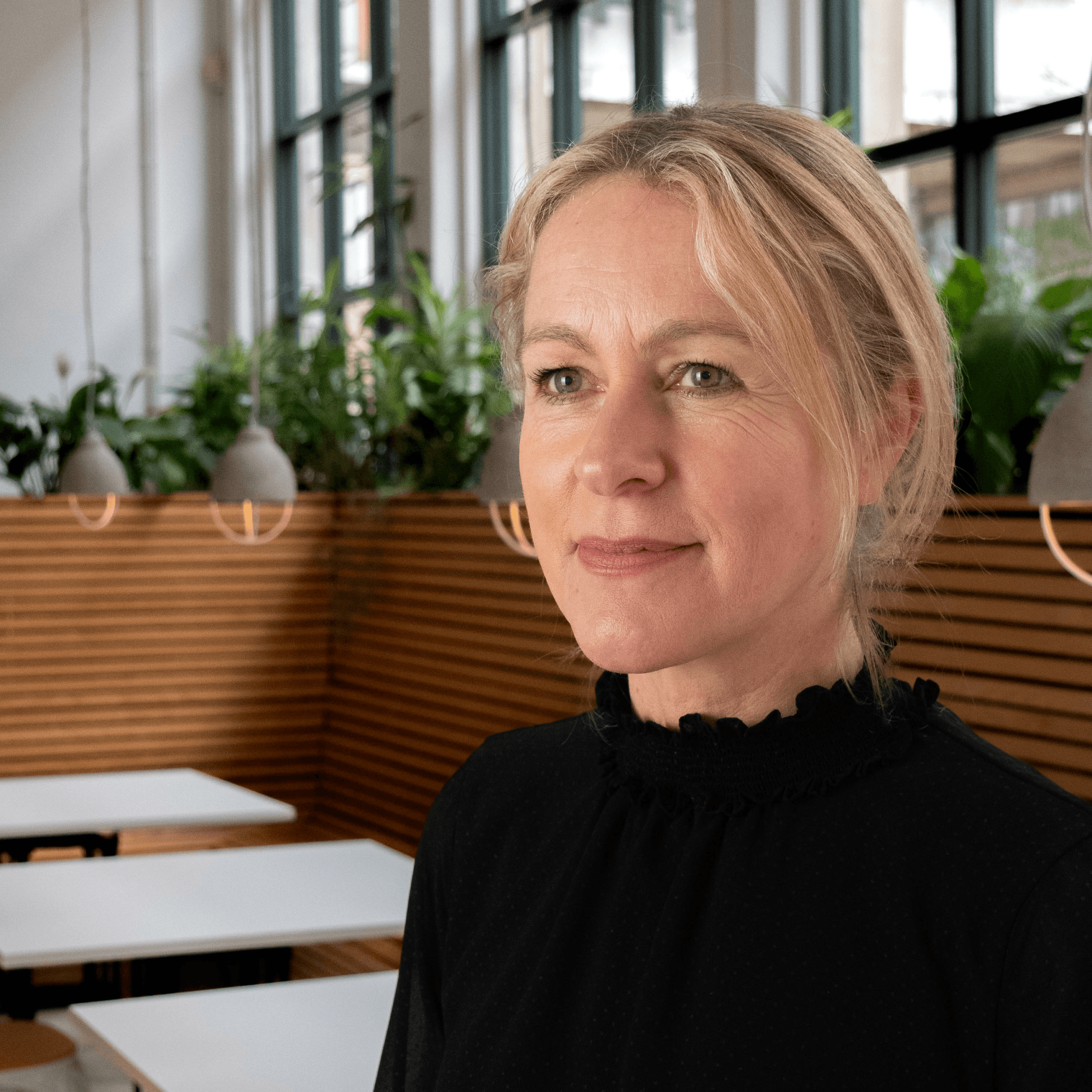
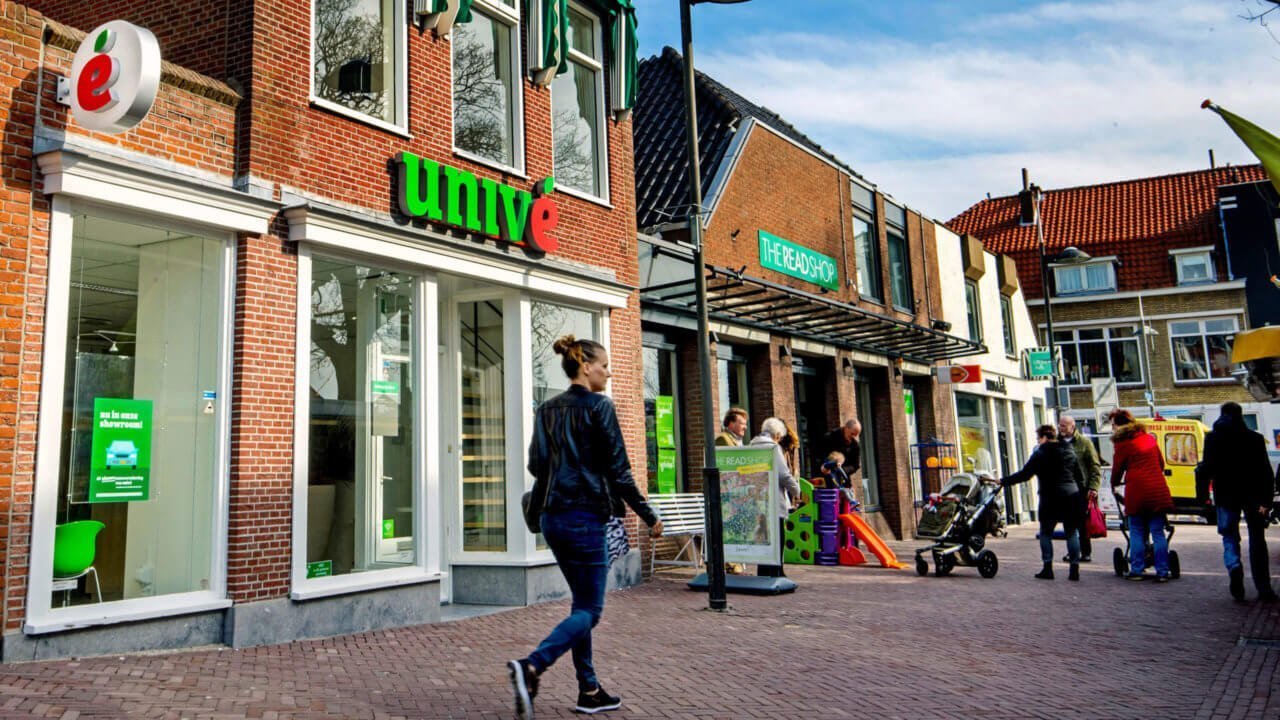
With around 2,700 employees, more than 100 locations and over 4 million policies, Univé is one of the best-known and most highly regarded brands in the insurance industry. Drawing on its cooperative DNA, Univé has embarked on a new strategic course: new propositions that go beyond insurance alone, combined with a completely renewed brand. As a result, Univé said goodbye to its logo with an apple and a pear after 25 years. VIM Group mapped the impact of the rebranding and guided the implementation. I spoke with Pieter Borsboom, former Manager Merk & Communicatie at Univé, about the challenges of brand management and the future of the Univé brand.

Pieter Borsboom van Univé
What prompted the rebranding of Univé?“The logo was 25 years old and the corporate identity was not suited to a world of screens. From a professional point of view, there had been reason to rebrand for some time. On top of that, our brand research shows that the Univé brand is widely known in the market and is generally seen as reliable and likeable. Brand appreciation is high, but we score relatively low on relevance and distinctiveness. That was another important reason to renew the associations around the Univé brand. You can’t do that with communication alone. It starts with adjustments to your strategy.
“The main reason for the rebranding was Univé’s new strategic course.”
The main reason for the rebranding was therefore Univé’s new strategic course. Within that course we have made room for new propositions in which we focus not only on insuring, but also on preventing and limiting risks. We also want to express our cooperative character more strongly: to show in several ways that we are there for people. A brand renewal fits in with that as well.”
What is your biggest challenge in brand management?
“Our biggest challenge lies in our organisational structure. We have a national cooperative and around ten regional cooperatives. That also means we do not communicate or run marketing from a single place. We are not a top-down, centralised organisation. Imposing strict rules on how the brand is applied does not work in that setting, but of course we do want to present a coherent brand. Safeguarding and further developing the brand is organised centrally: a brand is not a democracy. Even so, it is important for us to leave room for the local character, and that was taken into account when the brand was developed. We also spend a lot of time inspiring our colleagues. We have to win them over to working with the new brand style in the right way.”
Is the brand more important than ever?
“I don’t know whether brands in general are more important than they were 25 years ago, but within Univé the importance of the brand has certainly increased. A new CEO was appointed in 2014, and for him it was self-evident that the brand should play a central role in the business strategy. That had not always been the case. Under the pressure of the crisis the focus was on conversion and short-term results, sometimes even at the expense of the brand. So within organisations you do see waves in how important the brand is.
“We deliberately choose to emphasise our cooperative character and our personal service.”
You also see that in many sectors – including insurance – products are becoming increasingly interchangeable. As an organisation you can then distinguish yourself on the level of service or price. Fixating on offering the lowest price is not a smart strategy in our industry. Ultimately the insurance world is fairly stable: each year, for instance, only 6% of people switch health insurer. That is why we deliberately choose to emphasise our cooperative character and our personal service. In the end we want to move from being an insurer you take out a policy with to an association you consciously join for the longer term. It is important that we express this in our brand as much as possible.”
Which tools or resources does Univé use to manage the brand?
“During the implementation of the new brand we set up a brand portal. Employees, partners and suppliers find our brand strategy there, news about the rebranding, and also all corporate identity elements and guidelines. We also use the platform to keep inspiring and motivating our people. A few months before the external launch of the new brand we started an internal campaign. Videos and other content were shared through our internal channels, and we celebrated various milestones – from applying the livery to the first car to going live with our rebranded website.
We deliberately implemented the new brand style internally a month before the external launch, so that employees could get used to the new brand in advance. Many organisations forget to pay attention to the internal side of a rebranding, even though it is your people who carry your brand and your brand values. We can already see our internal focus paying off. People are involved, they ask questions and they are even impatient. A fine sign that they are proud of our new brand.
“Many organisations forget to pay attention to the internal side of a rebranding.”
In the future we also want to start reviewing periodically how the new brand has been applied. In addition, we are going to use an inspiration platform within our brand portal. To activate its use, we need to get to work building a brand community of internal and external professionals who shape and carry the brand.”
How has Univé’s brand department changed compared with five years ago?
“The brand is increasingly central to the organisation, and there is more room to invest and develop it further. You can also see that the new strategic course has brought much more focus. Over the years a collection of (sub)brands, labels and names had grown across the branches, with too little coherence. We now work on the brand in a far more consistent way.
You also see that the brand is no longer a topic that only concerns marketing and communications. More and more departments within the organisation are involved – think of HR (employer branding) and the online team (UX). Our people are increasingly taking ownership of the brand themselves. As a brand manager, that really makes me proud.”
Which brands do you admire or use as inspiration?
“One brand we used as a source of inspiration for our rebranding is Umpqua Bank, a community bank in the US. Like us, they grew out of the local community and have physical branches, but they also have a modern look and an innovative approach. At Univé we have the same aim. In a few places in the country we are experimenting with new concepts to modernise our insurance offices, for example, and online we keep innovating too. A better-known example of a brand I find very strong and likeable is Albert Heijn. Every branch has a strong local character and a product range adapted to its surroundings, but to the customer it simply feels like one Albert Heijn. That brand does have to be managed well – there is no other way.”
Which trends have a major impact on the brand?
“These days we no longer take the time to read text. Communication increasingly takes place through moving image and sound. That has an impact on your brand. In the past your corporate identity was a logo, letterhead and a business card. Now sonic branding and voice branding come into play. As part of the rebranding we are working hard to find new brand sounds and brand voices for Univé. Voice-controlled technology is of course also being used more and more. And if you can then talk to a robotised Univé: what does that sound like?
“In the past your corporate identity was a logo, letterhead and a business card. Now sonic branding and voice branding come into play.”
The most important thing, of course, is that we rediscover our own character: who are we from our roots, and how do we translate that to the future? You can see that authenticity is becoming ever more important in the world of brands. People are looking for brands with a purpose again, brands that give them a good feeling. You see that development in the food and retail market: people want organic, ‘fairly’ produced products from the region. The same applies in other areas. People no longer want to connect with large corporates in the hands of shareholders. Contrary to our expectations, our brand and reputation research shows that our cooperative foundation scores highest of all among millennials. They value history and sincerity in a brand.”
How do you keep the Univé brand future-proof?
“First of all, it is important to keep your finger on the pulse, to research how the market experiences your brand and to respond to the way the world is changing. You can see, for example, that the pace of everything is increasing and that consumers expect ever more speed. Brands such as Coolblue and Bol.com are setting the trend: easy online buying, same-day delivery, transparency in the process and instant service. In the insurance industry we still have some serious steps to take in that area.
“If you haven’t changed anything about your brand for two years, you should really be asking yourself whether that is right.”
For a future-proof brand it is also important to keep developing and investing. If you haven’t changed anything about your brand for two years, you should really be asking yourself whether that is right. To keep the Univé brand distinctive, we have to be flexible and work in short cycles so that we can respond faster to new trends and developments. A brand is not a static given; you have to keep experimenting, and that is part of this era.”
–
Pieter Borsboom, former Manager Merk & Communicatie at Univé.
Read more interviews in the Future-Proof Brand Series.