Brand management in transition: why a brand today must connect rather than prescribe
Lessons from Bayer and STADA on master brands, local heritage, brand governance and AI

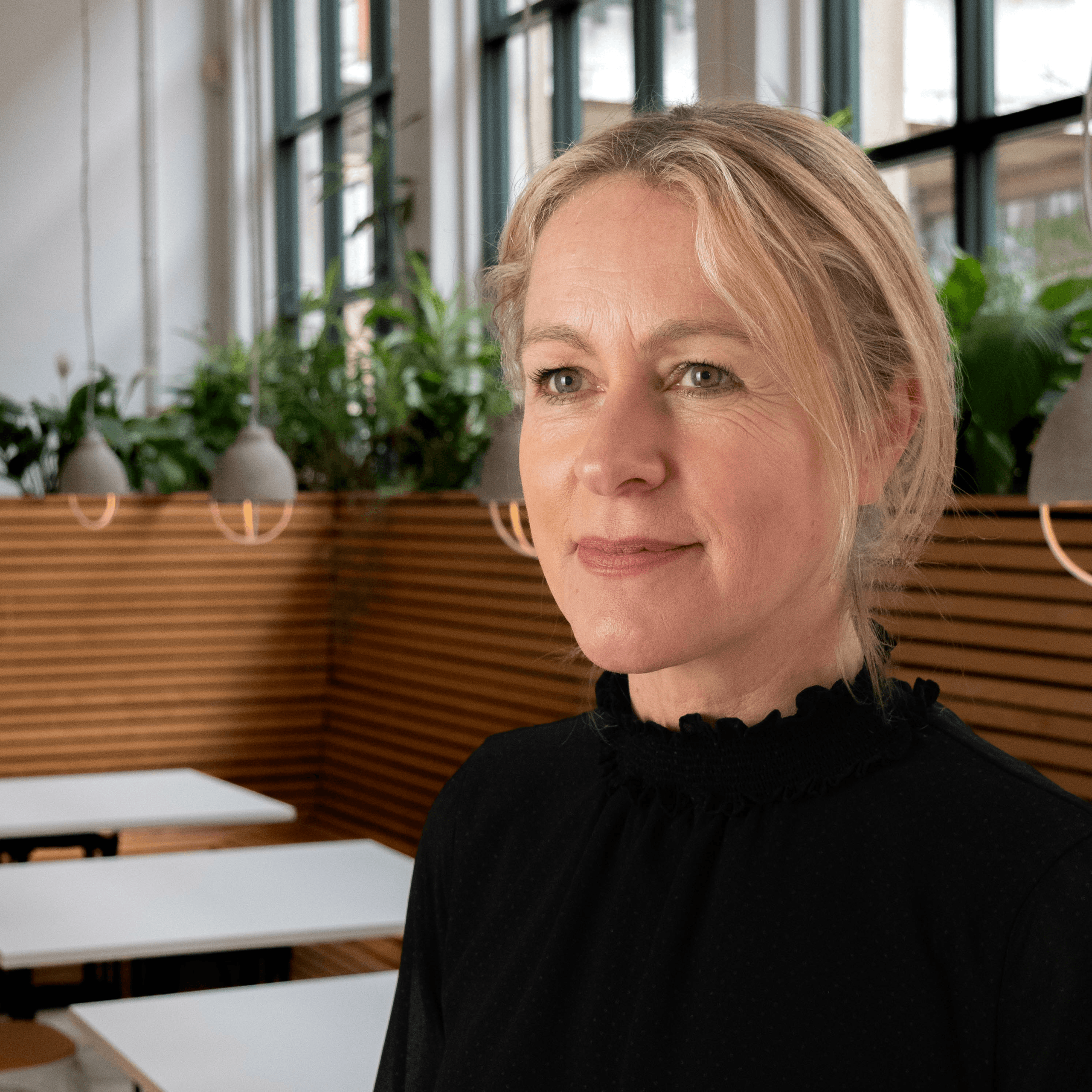
Florian Jakobi
Senior Brand Change Consultant
Agile structures, long established country organisations, AI in the hands of every employee: what holds a brand together when the company around it changes? At the Markengeflüster in November 2026, brand leaders from Bayer and STADA gave their answers.

The key learnings
There is no right brand model, only a suitable one. Brand architecture, organisation and business model must fit together, and established brand heritage should count as a criterion in that decision.
Purpose, vision and values are the north star. They connect the brand across countries and business units. Corporate culture and business success are directly linked.
Employees must be able and willing to live the brand. Tools enable them, and internal communication makes the brand matter to them.
Brand governance is a leadership task, not a rulebook. Consistency comes from a clear vision and role modelling at the top, not from thicker guidelines.
AI needs guardrails, enablement and a business case. It also makes the machine a second user of the brand: brand rules must be machine readable.
With GEO, brands help shape their narrative in AI answers, especially on critical questions. Media relations and the voices of employees gain new weight as a result.
One evening, many industries, the same questions
On 2 November 2026, brand leaders from well known companies came together at Memox in Cologne for the Markengeflüster. For the first time, komm.passion, an agency focused on strategy and design and also part of Team Farner, joined as co host. The guests came from chemicals, industry and healthcare, telecoms, logistics, retail, energy, residential property and insurance. All the more striking was how closely the topics lay together in the introductory round: purpose and transformation rank high on many agendas, as does the use of AI. And with it comes the question of how a brand stays consistent when everyone suddenly becomes an AI expert.
Two brand models that could hardly be more different
On the panel were Jean-Marc König (Managing Director, VIM Group) and Tobias Bruse (Deputy Managing Director, komm.passion), with Sven Theobald, VP & Global Squad Lead Corporate Brand at Bayer, and Frank Staud, EVP Global Communications & Government Affairs at STADA.
Bayer: a master brand as a trust anchor
Sven Theobald has been with Bayer for around 20 years and has been responsible for the corporate brand since 2020. At Bayer, the master brand connects all business areas. The Bayer cross builds trust with consumers, works across all areas and so drives the business. One sentence on one of his slides summed it up: “If it is from Bayer, it is good.” This trust, built over generations, is now carried by an organisation that has been fundamentally restructured. With the “Dynamic Shared Ownership” operating model, Bayer has removed hierarchy levels, and interdisciplinary teams work with autonomy in short cycles. To keep this dynamic from fragmenting, the mission “Health for all, Hunger for none” serves as the north star. Every activity has to pass one guiding question: “Does this contribute to the mission?”
STADA: local heritage as strategy
Frank Staud has been with STADA since 2017 and has supported its development from a German generics manufacturer into an internationally positioned healthcare company. This development has been strongly shaped by acquisitions. Many of the companies it acquired are well established under their own names in their countries and enjoy great trust there. That is why STADA continues to operate under these established names there, in France as EG Labo, for example, and in Belgium as EG. Local heritage is not a compromise here but part of the strategy. Rather than giving up established names, STADA relies on a shared corporate mission: purpose, vision and values were developed together with all countries. Internally, they are anchored through “One STADA”, the shared platform for all employees.
“Culture drives performance.” Frank Staud, STADA

Master brand or local brands: which brand model is right?
When two such different models sit on one panel, the question naturally arises. The answer of the evening: there is no right brand model, only a suitable one. What matters is whether brand architecture, organisation and business model fit together:
A master brand must also be able to carry its role.
Where heritage has grown over decades, it is worth using it.
Where local brands enjoy a lot of trust, it would be fatal to give up that brand value from the perspective of the head office.
Decisions like these require a solid data foundation, not gut feeling.
How does a brand stay consistent in decentralised organisations?
Regardless of the model, something that binds is needed, and that is created mainly internally. The more decentralised and agile an organisation works, the less a brand can be steered from the top. Employees must act in the spirit of the brand out of their own motivation. Brand management thus becomes an overall system of ability and willingness:
Ability: tools such as a brand portal, shared formats and a unified intranet enable employees to implement the brand correctly.
Willingness: internal communication makes sure the brand matters to them. Purpose driven communication provides orientation even in times of crisis and makes visible why their own work counts.
Brand governance becomes a leadership task
Less steering from the top does not mean less responsibility at the top. On the contrary: brand governance becomes a leadership task rather than a rulebook. The faster a company changes, the more consistency depends on a clear vision, and the less it depends on thicker guidelines. Whether change and culture take hold in a company depends largely on top management living them out with passion and long term commitment.
AI and brand: between consistency and visibility
AI took up a great deal of space. Used well, it can be a powerful lever for brand consistency. Either way, the development cannot be stopped. Rather than relying on bans, the task is to make AI broadly accessible, empower employees and set clear guardrails. What matters is not using AI for its own sake. Every application needs a clear goal and a business case that proves its concrete value to the company.
“AI must help us build trust.” Sven Theobald, Bayer
The brand gets a second user: the machine
When AI generates content, brand rules must also be machine readable. Alongside an AI solution for all employees, Bayer therefore relies on approved and officially marked assistants that support brand compliant results.
GEO: who determines what AI systems say about a brand?
From the outside, too, the machine has long been a user of the brand. The question is which image AI systems paint of it. Anyone who wants to co determine their narrative must give these systems the right information. This is where Generative Engine Optimisation (GEO) comes in: the targeted preparation of content for AI supported answer systems. Bayer has optimised its entire website for GEO so that its own content is preferred as a source. This explicitly includes answering uncomfortable questions openly and transparently. Whoever stays silent on critical topics leaves the answer to other sources.
In this way, established disciplines gain new weight. Media relations are enjoying a renaissance. And what employees write about their company online also feeds into the answers these systems give.
Conclusion: a brand must connect rather than prescribe
The conversations with Bayer and STADA made clear how differently the conditions for brand management can look: from established brand portfolios and local identities, through changes in organisation and culture, to new demands created by AI. In all these contexts, a brand unfolds its impact when it gives orientation and enables people to act in its spirit. For this, strategy, organisation, processes and technology must work together. Implementing a brand so that it unfolds its full impact is the core of our work at VIM Group.
We thank Sven Theobald and Frank Staud for their open insights, komm.passion for co hosting, and all participants for the exchange on equal footing, which continued into the networking afterwards.

Frequently asked questions
Is a master brand better than several local brands?
No, that cannot be said across the board. What matters is whether brand architecture, organisation and business model fit together. Bayer bundles its business areas under one strong master brand, while STADA operates in several countries under locally grown company names. Both approaches work because they suit the company in question.
What does brand governance mean in agile organisations?
Brand governance shifts from a rulebook to a leadership task. The more decentralised a company works, the less a brand can be steered from the top. Consistency then comes from a clear vision, from role models in top management and from employees who can and want to implement the brand.
How does a brand stay consistent when all employees use AI?
Through broad access, enablement and clear guardrails rather than bans. Brand rules must be machine readable so that AI applications deliver brand compliant results. Bayer relies on officially approved assistants for this.
What is Generative Engine Optimisation (GEO)?
GEO is the targeted preparation of content for AI supported answer systems. The goal is for these systems to use a brand's own content as a source and so co determine its narrative in AI answers. This includes answering critical questions openly.
What is the Markengeflüster?
The Markengeflüster is an invitation only networking format by VIM Group: a maximum of 30 brand leaders, personal exchange in a small group, and a case or panel as a starting point for discussion. In recent years, guests have included Airbus, Bosch, ABB and Henkel, among others.
Who is VIM Group?
VIM Group is a consultancy specialising in brand management and brand implementation, and part of Team Farner. The company helps organisations differentiate themselves and prove their brand promise, consistently across all touchpoints. VIM Group is neither a design agency nor a product supplier. Through consulting, project management and specialised services, VIM Group ensures that brands transform, scale and come alive: in strategy, processes, people, technology and structure. VIM Group has world leading expertise in rebranding. An international team of experts supports leading companies around the world through complex brand transformations.
Are you responsible for a brand and would like to join the next Markengeflüster? Get in touch with Jean-Marc König: jean-marc.koenig@vim-group.com.


