Nuon becomes Vattenfall: introducing a purpose-driven brand
It gave us a new opportunity to position ourselves in the market

Loes Verhoeven
Group Marketing & Communications Manager
On Thursday 20 June, more than 1,700 brand, communications and marketing professionals came together at DeFabrique in Utrecht to gather inspiration during the Nima Marketing Day. The day was divided into 15 tracks, one of which was – how could it be otherwise – called ‘THE BRAND’. Throughout the day there was no escaping it: the brand is high on the agenda of Dutch marketing once again. The marketer’s focus is shifting more and more from short-term results to long-term brand thinking, and ‘purpose’ plays an important role in that.

campagnebeeld van Vattenfall's "fossil free within one generation"
VIM Group hosted a session together with a brand that is right in the middle of the transition to a purpose-driven brand. Nuon, owned by the Swedish company Vattenfall for 10 years now, will carry the same name as its parent company from this year onwards. The brand migration is part of Vattenfall’s one-brand strategy and the broad launch of a purpose: making fossil-free living possible within one generation. ‘Power Climate Smarter Living’, as they call it. VIM Group is supporting them in the brand transition. Below is a look back at the session in which Guido Stein, Director Customer Strategy & Brand at Nuon, and Erik Voskuijl, Senior Brand Consultant at VIM Group, discuss the motivation behind the rebranding, the challenges of letting go of one of the best-known brand names in the Dutch energy market and the plans for the future.
Why a purpose-driven brand?
Erik Voskuijl opens the session with a number of questions to the audience. When he asks who works for an organisation with a clear purpose, about half of those attending the session raise their hand. With the next question – whether this purpose is actually accepted internally and fits the business model – the numbers already thin out. And when the final question is asked – whether purpose is really used as the starting point for action – we see only a few hands left in the air. “A problem many organisations have to deal with”, says Voskuijl.
Recent research by Accenture has shown that around 62% of consumers choose brands from organisations that are transparent and take a position on sustainability. The closer the purpose is to the consumer’s convictions, the greater the chance of a connection. Voskuijl: “Purpose, however, is not just about placing a nice statement on your website or launching an impressive advertising campaign. It has to genuinely flow through the veins of your organisation. What we see in the market is that the price and quality of products and services and the customer experience matter. At the same time, we also see that more than that is needed: something that sets you apart from competitors. You can find that in conveying purpose.”
58% of the organisations with a clearly formulated and understood purpose experienced financial growth of 10%
Not making the step towards a purpose-driven brand? Then you will have to pay the price. The Accenture research mentioned above also shows that customers increasingly (47%) ‘walk away’ if they do not believe in a brand’s purpose. And in many cases they do not come back either. In short, if you fail to implement your purpose properly, you lose business. Purpose and profit go hand in hand. “But as we now know: simply having a purpose is not enough. It is important to integrate your purpose into your brand. That is central to the rebranding of Nuon into Vattenfall”, says Voskuijl.
The brand transition from Nuon to Vattenfall
Guido Stein starts his part of the session by sketching a picture of Vattenfall, the purpose and how it is experienced in Sweden, the home country of parent company Vattenfall: “In Sweden the climate is even higher on the agenda than in the Netherlands – there is even something there we call ‘climate stress’. In the Netherlands we also worry about the climate, but not yet in the way they do in Sweden. Last year, for example, drought caused forest fires in which people lost their homes. That brings climate change close. Sweden was already known as one of the most progressive countries in reducing CO2 emissions, but extra momentum has been added to that. In the Netherlands we can learn a lot from it. The ambition we have with Vattenfall therefore goes much further than simply ‘selling green electricity’, which is what most energy suppliers in the Netherlands do. We are pursuing fossil-free living within one generation. An objective that fits the climate agreement plans we want to commit to.”
Stein: “A wonderful story, of course, but not without its challenges. After all, we are leaving behind the name recognition of the Nuon brand in the Dutch energy market. At this moment the brand name ‘Nuon’ has no less than 97% brand awareness, while Vattenfall was still unknown at the start of the brand change. I was given the assignment to migrate Nuon to Vattenfall as quickly as possible, but with as little impact as possible on our commercial results. Quite a challenge, as you will understand.”
Guido Stein: “Adopting the name Vattenfall gives us a new opportunity to position ourselves in the market.”
The question quickly comes from the audience: “It is wonderful that you are launching a purpose, but couldn’t that simply be done under the name Nuon?”. Stein: “These are European initiatives we are working on to make our energy more sustainable. We have to do that under one and the same name. As a group you can mean much more in the world. On top of that, Nuon does not have the best name when it comes to sustainable energy. Adopting the name Vattenfall gives us a new opportunity to do things differently and to position ourselves in the market again. We can genuinely add value to our brand. Energy is a low interest product and at the moment we are mainly dealing with a price-driven market. Yet we also see that people are increasingly concerned with the climate changes and the government measures that have an impact on them personally. What does this mean for my home? Will I still be allowed to drive my diesel car in five years’ time? We want to help our customers find answers to these kinds of questions and be a leading player in the energy transition that is taking place in the world. We can do that best together under one brand name, where we can combine scale with local knowledge.”
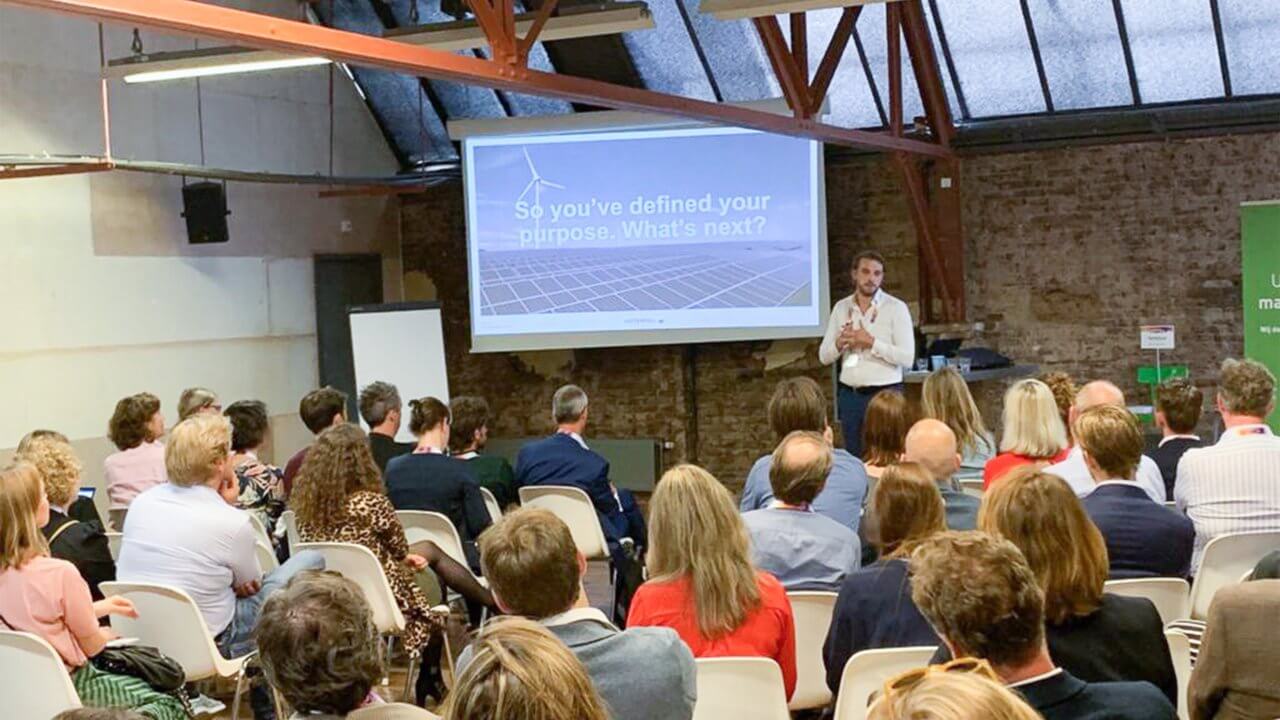
Guido Stein during the Nima Marketing Day
Rebranding: the approach
Turning our people into brand ambassadors
In October 2018 we started internally with the preparations for the rebranding. Together with Nuon’s employees, a large programme (the ‘where I work’ campaign) was set up to make sure that everyone knows the new brand inside out and really starts to feel what Vattenfall is. We are focusing on a change in mindset, not just a change of brand name, and it is of course our employees who are the face of Vattenfall for our customers.Transferring our brand equity to customers
Taking customers along in the brand transition in the right way is in fact more important than generating name recognition among non-customers. Nuon very much wants to bring its customer base along. The big challenge here is the balance between “not changing too much” and delivering “the right renewal”. That is why an ‘endorsed logo’ is currently being used, combining the names Nuon and Vattenfall, with Nuon introducing Vattenfall as it were.Creating brand awareness with the help of purpose-driven campaigns
Presenting Vattenfall as a new brand to a wider audience is by far the most enjoyable part, Stein indicates. A new story, a new face, the creativity in the communications. Hard work is being done on creating new brand awareness campaigns in which our purpose plays a major role.
The session is closed with a number of questions from the audience, including about the next steps in the rebranding plans. Stein indicates that it will take about a year until Nuon fully switches to the name Vattenfall. The audience is also curious whether the transition to the new brand will have an effect on prices. According to Stein this is not the case. He does point out, however, that new propositions will come to market that will genuinely help customers further on their journey towards fossil-free living. Both living and working and travel and transport are important main themes that will take centre stage in that.