
The cost of a rebranding: how to avoid surprises
With a few tips and a representative case

Loes Verhoeven
Group Marketing & Communications Manager
You are on the eve of a far-reaching identity change or rebranding. It is a costly operation, and the costs are not always estimated well beforehand – they often turn out higher once implementation of the new identity has started. A complete rebranding or a change to the visual identity can, for example, lead to high and often unforeseen operational costs. Think of higher maintenance or licensing costs as a result of brand-related measures. But how do you avoid these unpleasant surprises? This blog offers a number of practical tips.

Een rebranding levert de nodige hoofdbrekens op
Selecting and briefing a design agency
A common cause of unforeseen costs during and after a rebranding or a change to the visual identity is an incomplete design brief. Selecting and briefing a design agency is often the first step an organisation takes once the intention to rebrand has been announced. Typical subjects in a design brief are the description and history of the organisation, the market it operates in, the target audiences it focuses on, the competition, design conventions in the sector, the communications strategy and the (new) positioning, the brand and/or design architecture, and so on.
“A common cause of unforeseen costs in a rebranding is an incomplete design brief”
Organisations are not a ‘clean sheet’
With the organisation’s input, the designer then gets to work. The building blocks – logo, colours and visual language – are often designed from a ‘clean sheet’, after which they are translated to specific brand carriers. Organisations, however, are not a clean sheet, and introducing a visual identity that differs sharply from the existing one can lead to unexpectedly high costs. We regularly see an organisation start implementing its new identity in good spirits, only to realise halfway through that the operation – or maintaining the identity afterwards – is becoming too expensive. The consequences are drastic measures, such as extending the rebranding period or simplifying applied designs after all.
Tips for avoiding unpleasant surprises
The following tips can help you avoid unforeseen costs in a rebranding or brand change.
Define the different implementation scenarios for the rebranding in advance and map out their consequences in terms of cost, quality and planning. Then make a considered choice for the scenario that best matches the expectations, constraints and wishes of the organisation. Carrying out research beforehand – an impact analysis that sets out the various rebranding scenarios – can help.
Determine in advance what budget is available for the identity change or rebranding. And more importantly, be realistic about it. There is nothing more frustrating than discovering halfway through the project that you are running over budget and cannot carry on with your plans.
Consider beforehand whether and to what extent ‘design freedom’ needs to be given boundaries, prompted by budget limits or by operational considerations. Those boundaries should become part of the design brief. If you have a lot of trucks and vans, for example, consider having the new or adjusted identity designed so that it can be applied without having to respray (or rewrap) every vehicle. Within a short period that is often unfeasible, financially as well as operationally.
Think about savings too: rebranding programmes often offer opportunities to reduce the ‘total cost of ownership’. Following on from the previous example: some organisations use vehicles in a non-standard colour, for which a premium was paid on purchase. Choosing a standard and popular base colour can generate savings, both on purchase and on disposal – in the latter case because of a higher residual value. And that certainly does not mean the vehicles have to be white.
Test the applied designs (at brand carrier level) against practical and financial feasibility before implementing the new brand, and reconsider designs in good time where necessary. Also check how far the designs meet the wishes and requirements set out in the brief. That also keeps you from getting bogged down in subjective discussions about what is or is not ‘attractive’.
Do not run the design process in ‘splendid isolation’, but in close collaboration with representatives of the various operational areas. Designers would of course rather not be steered too much in the creative process, but most will not close their eyes to a good argument. Better to turn back halfway than to lose your way entirely.
“Once the unforeseen problems are out of the way, a rebranding becomes what it should be: a successful programme with a positive impact”
In short: research the implementation scenarios in advance and make a conscious, considered choice, spell out the design consequences of that choice in the design brief, and make the design process an iterative one in which designer and client/implementation team work together towards the optimal solution. Small surprises will always crop up in a large change programme. But once the bigger unforeseen problems are out of the way, a rebranding becomes what it should be: a successful programme with a positive impact, internally as well as externally.
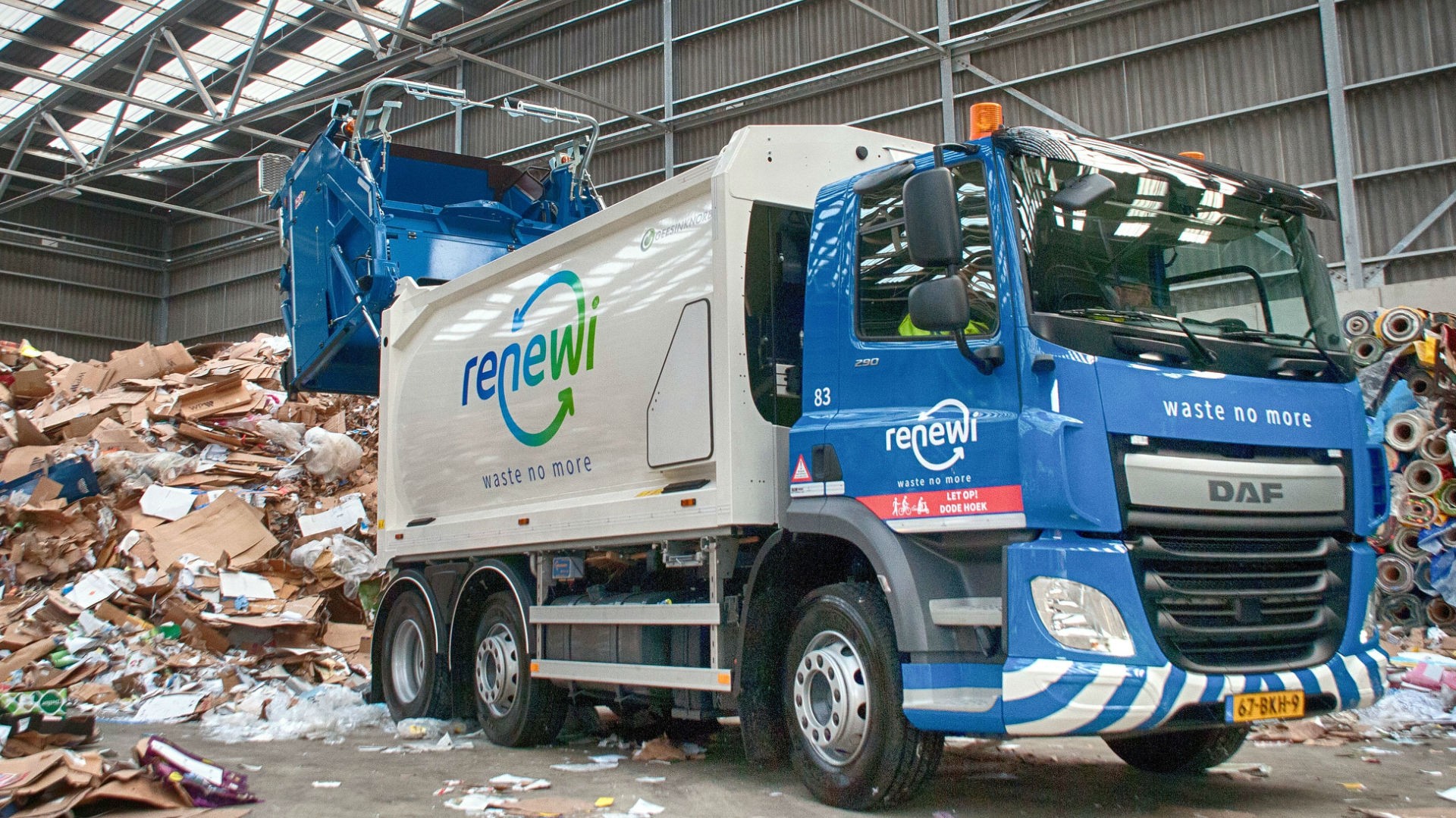
Renewi: millions saved through smart design choices
One organisation that saved costs cleverly during its rebranding process is Renewi, one of the largest players in Dutch and Belgian waste processing and recycling. Because of the sheer number of brand carriers – 200 sites, a large vehicle fleet and hundreds of thousands of containers – the identity change inevitably involved substantial investment. Renewi nevertheless managed to keep that investment relatively limited, partly by setting smart conditions for the design.
The organisation runs 2,500 vehicles, many of them complex. An important condition when developing the applied designs for these trucks was that their base colours would be the same as in the old Van Gansewinkel identity: blue cabs with a white body. As a result, well over half of the new fleet only needed self-adhesive materials. Still a costly operation, of course, but because respraying the vehicles was no longer necessary, millions of euros were saved.
Read more in the Renewi case study.